Driving in the Netherlands is something many international travelers consider when planning their trip. For visitors coming from the United States or Canada, renting a car often feels like the most natural way to explore a new country. At the same time, there are questions about road rules, safety, and whether driving is actually necessary.
The Netherlands is known for its organized infrastructure and compact layout, but the driving experience can feel different from what many are used to. Understanding how the road system works, what to expect from other road users, and when a car is useful can help you decide if driving fits your travel plans.
Understanding the Dutch road system
The road network in the Netherlands is modern, well maintained, and clearly structured. Highways, also known as motorways or expressways, connect major cities such as Amsterdam, Utrecht, Rotterdam, and Eindhoven.
Speed limits and road types
Speed limits are displayed in km/h, which can take some adjustment for drivers used to miles per hour.
- Highways typically allow higher speeds
- Urban areas have lower limits
- Residential streets often include speed bumps to slow traffic
Speed cameras are common and strictly enforced. Drivers are expected to follow limits carefully, as speeding fines are automatically issued.
Navigation and signage
Road signs are consistent and easy to follow, even for international drivers. Navigation apps like Google Maps work reliably across the country and are widely used.
The signage system may feel more compact than in the United States, but directions are clearly indicated, and distances between exits are short.
Key differences from driving in the United States
Driving in the Netherlands is not difficult, but there are several important differences that affect the overall experience.
Sharing the road with bicycles
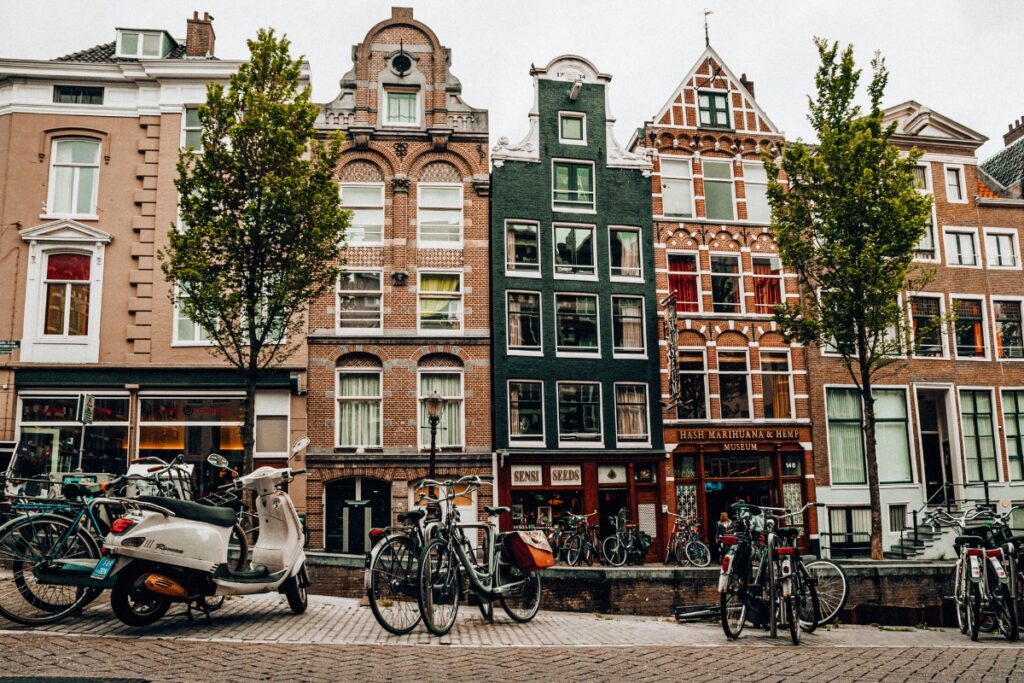
One of the most noticeable differences is the presence of bicycles. Cyclists have a strong position in traffic and often have dedicated lanes.
Drivers must:
- Always check for bicycles when turning
- Yield where required
- Be aware that cyclists may approach from multiple directions
This is especially important in cities like Amsterdam and Utrecht.
Trams and public transport
In cities, trams are part of the road system and usually have priority. Drivers need to be cautious around tram tracks and stops.
Bus stops and public transport lanes are clearly marked, and drivers should avoid entering restricted areas.
Roundabouts and priority rules
Roundabouts are common and generally function smoothly. In most cases, traffic already on the roundabout has priority.
Signs such as “priority road ahead” indicate right of way, which may differ from expectations in North America.
Requirements for renting and driving a car
Before driving in the Netherlands, it is important to understand the basic requirements.
Driving license and documents
Most visitors can use their existing driver’s license, but an International Driving Permit may be recommended depending on your country of origin.
When renting a car, you may need:
- A valid driver’s license
- Identification
- Rental agreement documentation
Insurance and vehicle basics
Car rental companies include basic car insurance, but coverage levels can vary. It is useful to understand what is included before driving.
Vehicles in Europe are often smaller than in the United States, and manual transmission is common, although automatic options are available.
Parking and city driving
Parking is one of the main challenges when driving in Dutch cities.
Parking availability
In cities like Amsterdam, parking spaces are limited and regulated. Parking garages are available, but finding street parking can take time.
Parking tickets are enforced strictly, and regulations vary by area.
Driving in urban areas
City streets can be narrow, and traffic includes bicycles, trams, and pedestrians. For many visitors, driving in busy city centers can feel less comfortable than expected.
Because of this, many travelers choose to park outside the city and continue using public transportation.
When driving is useful
Driving is not always necessary in the Netherlands, but it can be helpful in certain situations.
Exploring beyond major cities
A car is useful for visiting:
- Smaller towns
- Rural areas
- Nature regions
- Places like Keukenhof or Zaanse Schans
These locations are accessible by public transport, but driving offers more flexibility.
Flexible travel schedules
If you prefer to travel at your own pace or visit multiple locations in one day, a car can provide convenience.
When driving is not necessary
For many parts of the Netherlands, driving is optional rather than essential.
Public transport as an alternative
The public transportation system is highly developed and connects cities efficiently. Trains are frequent, reliable, and often faster than driving between major destinations.
This makes it possible to travel across the country without relying on a car.
Staying in a central location
Because distances are short, staying in a central area allows you to explore multiple cities without long drives.
For example, staying in central Holland near Utrecht provides easy access to Amsterdam, Rotterdam, and The Hague by both train and car. A location such as ’t Eekhoornnest Holiday Village fits this approach, offering a base from which day trips can be planned without constant relocation.
Practical driving tips
A few practical tips can make driving more comfortable.
Safety and regulations
- Always follow speed limits and traffic signs
- Be aware of speed cameras and enforcement
- Avoid driving under the influence, as laws are strictly applied
Road awareness
- Watch for cyclists at intersections
- Use turn signals clearly
- Expect frequent changes in road layout in urban areas
Planning your journey
- Use navigation tools for real time updates
- Check for traffic congestion, especially during peak hours
- Allow extra time when driving in unfamiliar areas
Conclusion
Driving in the Netherlands is generally safe and manageable, especially for visitors who take the time to understand local rules and road behavior. The road network is efficient, signage is clear, and distances between destinations are relatively short.
At the same time, driving is not always necessary. The strength of the public transport system and the compact nature of the country make it easy to explore without a car. Choosing when to drive and when to use other options can make your trip more efficient and less stressful.
By understanding how driving fits into the overall travel experience, visitors can make informed decisions that match their itinerary. Center of Holland provides guidance to help travelers navigate these choices and explore the country in a practical and accessible way.