
Family Resorts in the Netherlands
Ask an American family where they are staying in the Netherlands and you will usually hear “a hotel in Amsterdam.” Ask a Dutch family and the answer is almost always different: a bungalow on a vakantiepark, in the woods, booked six months ago.
Dutch holiday parks are the country’s default family holiday, and almost no visitor from overseas knows they exist. For a certain kind of trip they beat any city hotel: more space, a kitchen, a garden, a fraction of the price per person, and a front door that opens onto a forest.
Here is how they actually work, and how to pick one.
What a Dutch Holiday Park Actually Is
There is no clean American equivalent, which is why it is so easy to miss when planning from abroad. A Dutch holiday park is not a hotel, not a campground, and not an Airbnb.
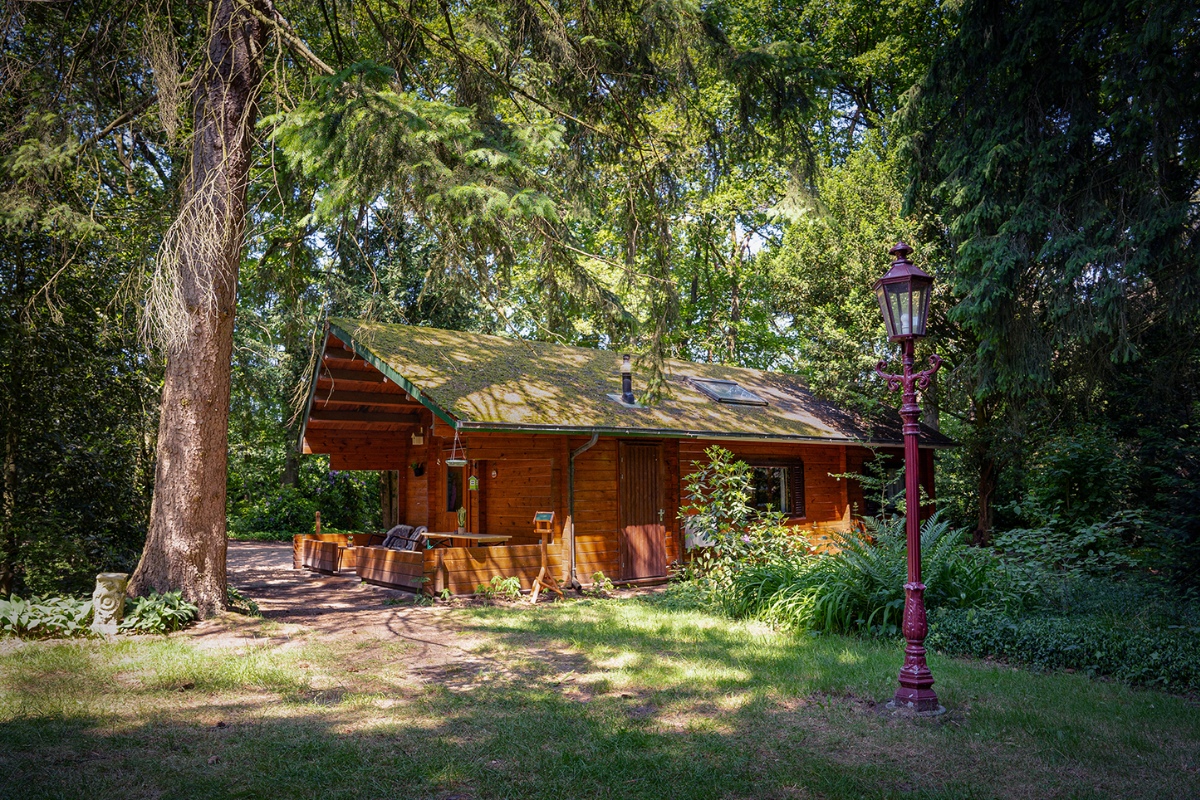
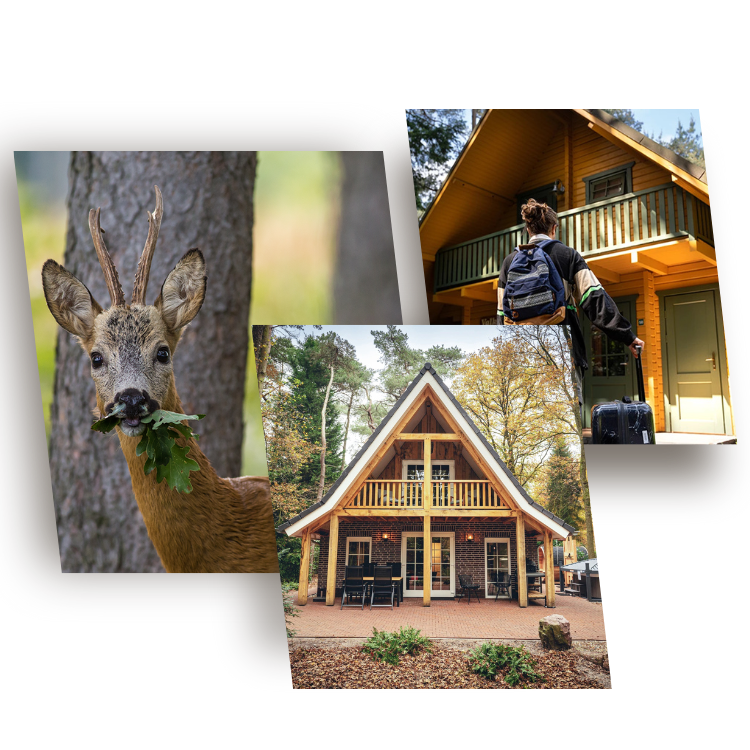
It is a private estate of detached holiday homes, usually wooden bungalows, each with its own garden, terrace, parking space and fully equipped kitchen. You rent the whole house, not a room. Around the houses sits a shared layer of park facilities: a playground, often a swimming pool, a small shop, bike rental, and in school holidays an activity programme for children.
The scale ranges enormously. Some parks have 700 homes and an indoor water park. Others have 40 homes and a footpath into the trees. Both are called a vakantiepark, which is the single biggest source of confusion for first-time visitors.
Three things hold true almost everywhere:
- You rent the whole house. A “4-person bungalow” means two bedrooms, a living room, kitchen, bathroom and garden.
- Most parks sell fixed blocks, not arbitrary nights: a weekend (Fri to Mon), a midweek (Mon to Fri) or a full week.
- They are in nature, not in cities. That is the point, and also the catch.
The Chains: Who Runs What
Center Parcs is the name most international visitors recognise. Its defining feature is the Aqua Mundo, a large subtropical swimming paradise. The parks are big, facility-heavy, uniform, the most expensive of the mainstream options, and deliberately remote, because the park itself is meant to be the destination.
Landal GreenParks is the largest alternative and the most varied, from big activity resorts to small quiet parks where the nature is the only facility. The brand name tells you almost nothing. Read the individual park page.
Roompot is the biggest operator on the Dutch coast, with the deepest selection of beach parks and actual dune houses.
EuroParcs is large, growing fast, nature-first, concentrated in the centre and south, with some genuinely luxurious holiday homes including private wellness.
TopParken is a family-run company with a smaller portfolio for quieter guests, and a good line in holiday homes with a private hot tub or sauna.
Also active: Molecaten, Summio (value-focused, assembled from former Landal and Roompot parks), Dormio (exclusive, small) and RCN (part park, part campground). Then there are the independents: privately owned parks, often decades old, belonging to no chain. Hardest to find from abroad, frequently the best value.
Book your stay in the Center of Holland
Eekhoornnest Holiday Village has many types of rental accommodations that fit the needs and budgets of vacationers and families of all sizes.
Save 10% on your stay with promo code ‘9047EH’
Big Resort or Small Park? The Decision That Actually Matters
Everything else is detail. This is the choice.
A big resort sells you a self-contained holiday. The pool, the bowling alley and the entertainment team are the product. You park the car and barely leave. For young children in November, that is genuinely good.
A small park sells you a base. A playground, a barbecue and quiet. The holiday happens outside the gate.
Large resort | Small park | |
|---|---|---|
Price | Higher, especially in school holidays | Often significantly lower |
Rainy days | Solved on site | You need a plan |
Crowds | Hundreds of families | Often near-silent |
Location | Usually remote by design | Frequently better placed |
Best for | Kids 4-12, bad weather | Exploring, teenagers, couples |
Most international visitors assume they need the first one. If you flew here to see the Netherlands, the water slides are a facility you will use twice and pay for all week. The location is what you use every single day.
Where to Base Yourself
The region matters far more than the brand.
The Veluwe is the largest forest region and the densest concentration of parks. Heath, sand drifts, red deer. Hoge Veluwe National Park, the Kröller-Müller Museum and Apenheul are here, and it is excellent for cycling. The catch is distance: from the eastern Veluwe, Amsterdam is a real journey.
The coast runs from Scheveningen to Noordwijk and down into Zeeland. Wonderful in summer, bleak in February.
The islands are a destination, not a base. Limburg has the only hills, and is a long way from the classic Dutch sights.
The centre, the Utrechtse Heuvelrug and the Gooi, has fewer parks than the Veluwe and is the region most overseas visitors never look at. It is also the only one from which the whole country is a day trip. Amsterdam is roughly 30 minutes by car, Utrecht 20, and Rotterdam, The Hague, Haarlem and the tulip fields are all inside a morning. You unpack once and everything comes to you. Our guide to seeing the Netherlands without changing hotels covers how that works.
One example of what a small central park looks like: Bungalowpark ‘t Eekhoornnest in Soest has 42 accommodations, has been run by the same family since 1963, and sits against the Soester sand drifts at the foot of the Utrechtse Heuvelrug. No water park, no entertainment team. A Finnish Kelo sauna at the edge of the dunes, bike rental, a playground, and forest paths from the gate. It is a base rather than a destination, and priced accordingly.
Family Resorts Near Amsterdam
There are no holiday parks in Amsterdam. The city has no room for them.
What exists is a ring of parks 30 to 60 minutes out, and for most visiting families that is the smarter option anyway: a house with a garden for less than a city hotel room, and parking that does not cost a fortune.
- The Utrechtse Heuvelrug and Soest, about 30 minutes by car. Forest, and the shortest onward distances to everywhere else.
- The Gooi, around Hilversum and Laren. Wooded and well connected.
- The dune parks near Noordwijk and Zandvoort, 30 to 45 minutes. Beach, and close to Keukenhof in spring.
- Flevoland and the Veluwemeer, about 45 minutes. Lakes, water sports, and near Walibi Holland.
If you fly into Schiphol and rent a car, most of these are closer to the airport than central Amsterdam is in rush hour.
What You Pay Extra For
The headline price is rarely the price you pay. This catches out almost every first-time international guest.
Included: the house, a fully equipped kitchen, Wi-Fi, terrace and garden, a parking space, and the general park facilities.
Usually extra: bed linen and towels (rented per person), final cleaning (a fixed fee), tourist tax (per person per night), a refundable damage deposit, and at some smaller parks electricity and gas, metered and billed on departure. Worth checking before you book a winter stay.
When to Book
July and August are the Dutch school holidays. Prices roughly double and the best parks are gone by February.
May, June and September are the sweet spot: decent weather, prices drop the moment schools go back, parks are calm. See our guide to the best time to visit the Netherlands.
October to March is when big resorts earn their keep. A midweek can cost less than one night in an Amsterdam hotel, and an indoor pool stops being a luxury.
Around Easter and King’s Day (27 April), expect a spike. Tulip season overlaps, so demand near the tulip fields is intense.
Frequently Asked Questions
Are Dutch holiday parks good value compared to hotels?
For a family of four, usually yes and often dramatically so. One house instead of two hotel rooms, a kitchen instead of three restaurant meals a day, parking included. The saving is smaller for couples.
Do I need a car?
For most parks, yes. They are in nature, and nature is where public transport is thinnest. Centrally located parks are the exception: a bus to a nearby station plus the rail network covers a lot. See day trips from Amsterdam by train.
What is the difference between Center Parcs and a bungalow park?
Center Parcs is a bungalow park. “Bungalowpark” or “vakantiepark” is the generic Dutch term for the whole category, from the 700-home resort to the 40-home family business.
Do the staff speak English?
Yes, fluently, at every park you are likely to book.