Most people plan a trip to the Netherlands without once picturing sand. Canals, yes. Windmills, tulips, museums, bikes. Almost nobody arrives expecting more than 250 kilometres of open North Sea beach backed by one of the largest dune belts in Western Europe, with wooden restaurants built straight onto the sand and a train station at the end of the line.
It is there, it is genuinely good, and half of it sits inside an hour of wherever you are staying. This is where to go, what a Dutch beach day actually involves, and how to get to one without a car.
The Short Version
Closest to Amsterdam: Zandvoort, roughly half an hour by direct train. Biggest and busiest: Scheveningen, on the edge of The Hague. Prettiest and quietest: the Wadden Islands in the north, reached by ferry. Warmest water and the best food: Zeeland in the southwest. Best for small children: Noordwijk or an inland lake beach. If you only do one, and you are basing yourself centrally, make it Scheveningen or Zandvoort, because both are one straightforward train ride and both have a proper beach pavilion to sit in when it inevitably starts blowing.
What a Dutch Beach Day Is Actually Like
Set your expectations correctly and you will love it. Set them to Florida and you will be confused.
The sand is pale, fine and very wide, and the beach shelves gently, so you can walk out a long way in shallow water. Behind it there is almost always a wall of dunes, which are a protected nature reserve and often the nicest part. The sea is the North Sea: grey green rather than blue, choppy rather than surf, and cold. In August the water gets to about 18 to 19 degrees Celsius, which is 64 to 66 Fahrenheit. In June it is more like 15. Dutch people swim in it cheerfully and Americans tend to make a noise going in.
And there is wind. There is nearly always wind. This is why every Dutch family arrives carrying a windscherm, a striped canvas windbreak on poles that gets hammered into the sand in a horseshoe. Buy one at any supermarket near the coast for around fifteen euro. It is the single item that turns a mediocre beach day into a good one.
A few things worth knowing before you go:
- Beaches are free. All of them. There is no entry fee, no beach club cover charge to simply sit down, and no private stretch of sand.
- Lifeguarded sections are marked with yellow and red flags and staffed by the volunteer Reddingsbrigade in high season. A plain red flag means do not swim.
- Some stretches are marked naaktstrand, which means exactly what it looks like. They are signposted and easy to avoid, or find.
- Dogs are usually banned from the main beaches in summer and allowed everywhere from October to April.
- Weather turns fast. Locals do not cancel a beach day for cloud, they just bring a jumper.
Scheveningen: The Big One
Scheveningen is the seaside resort attached to The Hague, and it is the closest thing the Netherlands has to Coney Island with better food. There is a long boulevard, a pier with a Ferris wheel and a bungee jump on the end, the grand old Kurhaus hotel behind it, and a solid line of beach pavilions running in both directions.
It is busy in summer and that is rather the point. Go for the atmosphere, the fish, and the fact that you can be there from the centre of The Hague in fifteen minutes on tram 1 or 9. The northern end, towards Wassenaar, empties out within a twenty minute walk if you want quiet.
Two things worth timing a visit around: the international fireworks festival in August, and the New Year’s Day dive, when thousands of people in orange hats run into the freezing sea at noon on the first of January and are handed pea soup afterwards. It is a genuinely great piece of Dutch national character.
Zandvoort: The Closest Beach to Amsterdam
Zandvoort aan Zee has its own station and direct trains from Amsterdam Centraal in about half an hour, which makes it the default answer to “is there a beach near Amsterdam”. You walk out of the station and the sea is four minutes away.
It is a straightforward, cheerful beach town, and the racing circuit sits just behind the dunes, so check the event calendar before you plan a quiet day in late summer. Just north, Bloemendaal aan Zee is where the beach clubs are: proper sound systems, cocktails, and a day that turns into a night. It is a short bus ride or a forty minute walk along the sand from Zandvoort, and it is much easier reached from Haarlem than from Amsterdam.
Noordwijk, Katwijk and the Bulb Coast
Noordwijk has one of the widest and calmest beaches on the mainland, a low key esplanade and a much older, more residential feel than Zandvoort. It is the one to pick with small children or with parents who want a chair, a coffee and a view rather than a party.
It also sits directly behind the bulb fields, which makes it a very good pairing in April: flowers in the morning, coast in the afternoon. See our guide to where to see tulip fields in the Netherlands for the routes.
Just south, Katwijk aan Zee is a former fishing village that never quite turned into a resort, with a lighthouse and a lot of families. North of Zandvoort, Wijk aan Zee is where the surfers and kitesurfers go, sitting slightly oddly next to a steelworks that you can see from the sand and that everybody has decided to find characterful.
The Wadden Islands: The Ones Worth the Ferry
Strung across the top of the country is a chain of five inhabited islands separated from the mainland by the Wadden Sea, a UNESCO World Heritage tidal flat that drains almost completely twice a day. These are the best beaches in the Netherlands and they do not feel like the Netherlands at all.
- Texel is the biggest and the easiest: a twenty minute ferry from Den Helder, thirty kilometres of beach, sheep everywhere, and Ecomare, a seal and seabird sanctuary that is genuinely worth an afternoon. The Slufter, where the sea breaks through the dunes into a salt marsh, is the walk to do.
- Vlieland is car free, has one village and is mostly dune and forest. Ferry from Harlingen. This is the one for people who want almost nothing to happen.
- Terschelling has thirty kilometres of beach, cranberry fields and hosts Oerol every June, a ten day festival that turns the whole island into a theatre.
- Ameland has four villages, a red and white lighthouse you can climb, and horse drawn lifeboat launches a few times a year.
- Schiermonnikoog is the smallest and the quietest, car free, and its beach is one of the widest in Europe. At low tide you can walk for what feels like a kilometre before you reach water.
Ferries take between twenty minutes and two hours depending on the island, and foot passengers rarely need to book far ahead outside July and August. Cars usually do, and on the car free islands you will not want one anyway. Rent a bike at the harbour like everybody else.
Zeeland: The Warmest Water in the Country
Down in the southwest, Zeeland is a jigsaw of former islands and sea arms now connected by the Delta Works, which is itself worth seeing as one of the largest flood defence systems in the world. The beaches here are sheltered, the water is a degree or two warmer, and the food is the best on any Dutch coast because the mussels and oysters come out of the water in front of you.
Domburg is the elegant old spa town, Renesse is where the young crowd goes, and Cadzand in the far south has quietly turned into the smartest stretch of coast in the country. Middelburg is the handsome town to base a day around if you want more than sand.
Zeeland is a longer drive from the middle of the country, roughly two hours, so it works better as an overnight or a full day out than a spontaneous afternoon.
Beach Pavilions, and Why They Matter
The strandpaviljoen is the thing that makes a Dutch beach work in a country where the weather is not reliable. They are wooden restaurants built directly on the sand, with terraces, beanbags, blankets in a basket by the door and full menus. Many are dismantled every autumn and rebuilt in spring, though a growing number now stay up all year.
You can sit in one for four hours over lunch, coffee and a beer while it rains, and then walk out onto the beach when it stops. Order the kibbeling, which is battered chunks of fried cod with garlic sauce, or a bowl of Zeeland mussels if it is a month with an R in it. Our guide to Dutch food and what to eat in the Netherlands covers the rest of the menu.
When to Go
July and August are warmest and busiest, and the pavilions are all open. June and September are the sweet spot: the water is still reasonable, the beaches are half empty and the light on the North Sea in September is remarkable.
Do not write off the off season. A cold, bright day in February with a hard wind, an empty beach and a bowl of pea soup afterwards is a very Dutch pleasure, and the dune reserves behind the beaches are at their best when the crowds have gone. See the best time to visit the Netherlands for how the rest of the year lines up.
Getting to the Coast Without a Car
This is a country built for it. Scheveningen and Zandvoort are the two easiest: Zandvoort has its own beach station, and Scheveningen is a short tram from Den Haag Centraal. Noordwijk and Katwijk are a bus connection from Leiden. The Wadden ferries all leave from harbours with a train or bus link, and your ferry ticket and bike hire can be sorted on the day.
Rough journey times from the centre of the country, around Amersfoort and Soest: about an hour and fifteen minutes to Zandvoort, an hour and a half to Scheveningen, two hours to the Texel ferry. From Amsterdam, subtract twenty minutes for the western beaches and add nothing for the islands. Our guide to getting around in Holland covers tickets and the OV chip system, and day trips from Amsterdam by train has more routes.
Beaches With Young Children
The gentle slope of the North Sea beaches means shallow water for a long way out, which is the main thing. Beyond that:
- Noordwijk and Katwijk have the calmest, widest sand and the most family pavilions.
- On Texel, the main family beach at paal 17 near De Koog is the calmest and the best staffed.
- Bring or buy a windbreak. With small children it is not optional.
- If the forecast collapses entirely, the country is full of indoor alternatives. See water parks in the Netherlands.
The Beaches Nobody Tells You About: Inland
Here is the part that surprises visitors most. The Netherlands has hundreds of lake and river beaches inland, most of them free, most of them with a snack bar and a lifeguard, and the water is meaningfully warmer than the sea.
In the middle of the country the Henschotermeer, a lake with a sand beach on the edge of the Utrechtse Heuvelrug National Park, is the local favourite and is a fifteen minute drive from Zeist or Soest. The Nulderstrand and Zeumeren sit on the lakes to the north. None of them are on any tourist itinerary, all of them are full of Dutch families on a hot Saturday, and that is exactly why they are worth an afternoon.
There are also inland dunes. The Soesterduinen, a stretch of drifting sand left behind by the last ice age, look like a beach with no sea and are one of the odder landscapes in the country. Our guides to hiking in the central Netherlands and exploring the Dutch countryside cover that side of things.
Where to Base Yourself
Nobody needs to move hotels to see the Dutch coast. From the middle of the country every mainland beach in this guide is between one and two hours away, which makes the coast a day trip rather than a leg of an itinerary, and it means you can decide on the morning based on the forecast rather than committing to a booking three months out.
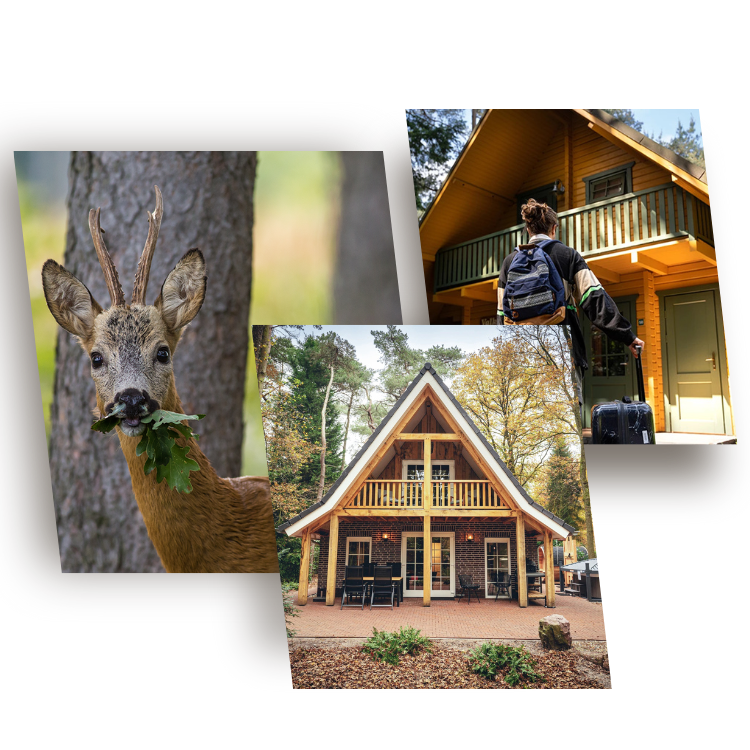
Bungalowpark ‘t Eekhoornnest sits in the woods at the edge of the Soester Dunes in Soest, family run since 1963, with the Henschotermeer twenty minutes away, Zandvoort and Scheveningen inside an hour and a half, and the ferry to Texel a straightforward morning drive. Read more about using a central Netherlands travel base, or compare it against where to stay near Amsterdam if the city is your main draw.